


Most people don’t realize they’re decorating backwards until something looks off.
The paint felt safe, the furniture looked beautiful in the store and the finishes were “neutral.”
And then the room came together—and suddenly nothing works.
What most people don’t realize is this: once you start decorating in the wrong order, you don’t just make one mistake. You create a chain reaction of purchases you never would have made if the plan had been right from the beginning.
Now you’re not decorating. You’re fixing.
And when you’re shopping to fix something, the room almost never becomes fabulous. It just becomes “better than before.”
That’s the cost of decorating backwards.
If you’ve ever found yourself repainting after the furniture arrived, or shopping for the perfect colour to “save” a room that already has too many conflicting finishes, you’re not alone.
You’re decorating backwards.
What Decorating Backwards Actually Means
Decorating backwards happens when decisions are made in the wrong order.
It looks like this:
- You choose paint before understanding the undertones of your floors, tile, or countertops.
- You buy furniture or cabinetry because it’s “neutral,” without checking how its undertone relates to what’s already installed.
- You commit to bold or trendy finishes—charcoal toilet, violet grey vanity, beige LVP—and then try to decorate your way out of the clash.
At that point, decorating turns into damage control.
The Classic Backwards Scenarios I See Every Day
1. The Paint-First Trap
You paint your walls a green-grey because it looks soft, calm, and neutral.
Your orange-beige natural fibre rug doesn’t look quite right, but you assume it will once the dining chairs arrive.
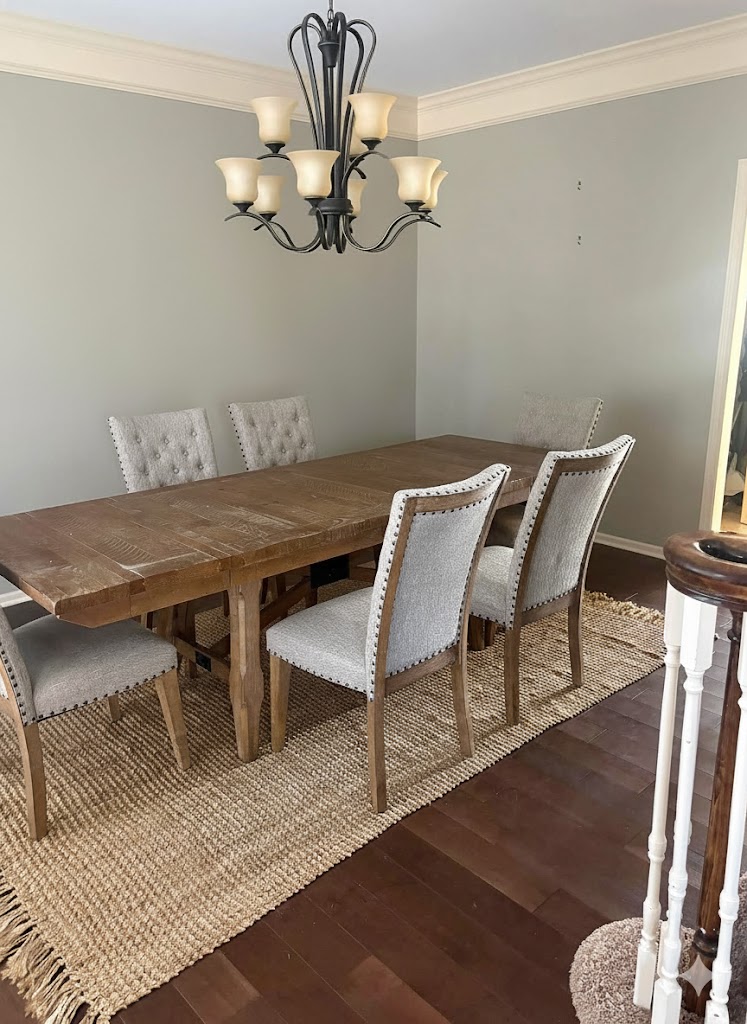
Then the violet-grey dining chairs show up—and suddenly the walls look green and wrong.
Nothing changed, you just revealed the undertone conflict.
2. The “They’re Both Neutral” Bathroom
A charcoal toilet.
A violet-grey stained vanity.
Gold beige LVP floors.
Each decision made sense on its own when you were shopping for bathroom fixtures based on guessing, well a charcoal toilet makes sense right? Something new, and doesn’t grey go with everything? But together, they fight.
This is when your timeless floor is not a pair of jeans. When choosing a secondary stain to coordinate with wood stained floors in this close proximity, they need to coordinate.
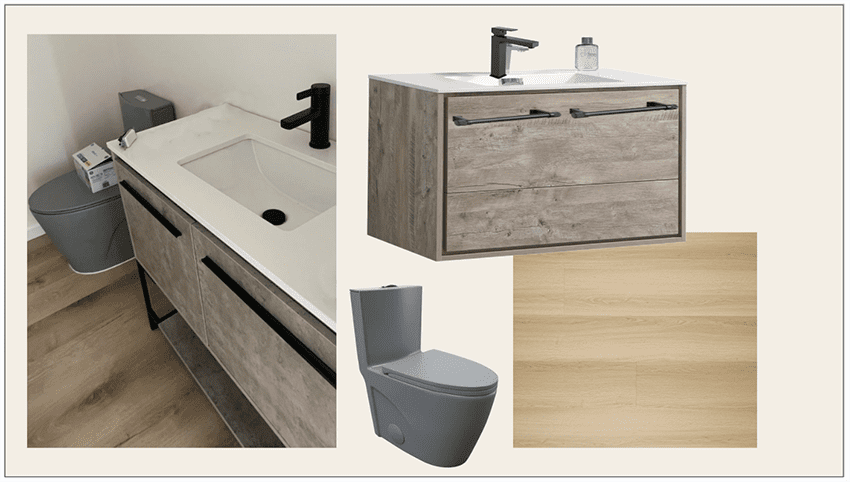
Now you end up shopping for magical wallpaper to distract from the clash.
Why This Keeps Happening
No one teaches the order of operations for decorating.
Online inspiration makes it look like everything comes together effortlessly. But real homes don’t work that way. They require careful sequential planning—and if you don’t understand how colour works, relationships, and the hierarchy, every new decision compounds the previous mistake.
Most people assume: “I’ll just choose everything I love and it will all come together.”
“Trust the process” is a common mantra on decorating forums.
But it doesn’t and you trusting the process is generally only a thing when you’re working with a designer who knows what they’re doing. This kind of piecemeal approach relies on a hope and a prayer. Much too risky for a big budget project you’ll have to live with for years to come.
Decorating Forward Changes Everything
Decorating forward means anchoring first with a timeless related foundation, then layering.
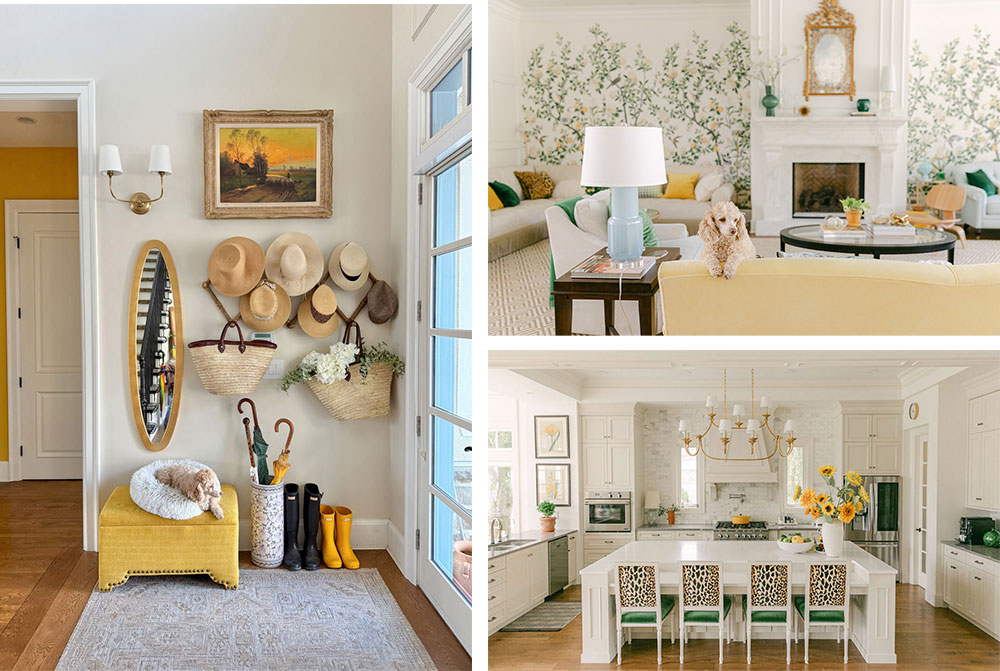
The correct order looks like this:
If you have existing finishes and furnishings:
- Identify what is fixed: floors, tile, countertops, major furniture pieces.
- Understand the undertones of those elements This isn’t about coordinating—it’s about choosing finishes that directly relate.
- Choose paint and soft finishes that support those undertones.
- Add colour, contrast, and styling last to bring the room to life.
If you have a blank slate:
- Start with a timeless finish plan before choosing anything decorative.
- Select related, classic finishes in the correct neutral undertone or gradation of white.
- Choose your accent colour inspiration once the foundation is established.
- Select furnishings and décor that repeat and reinforce those colours.
- Finish with layered lighting, texture, and styling for depth and personality.
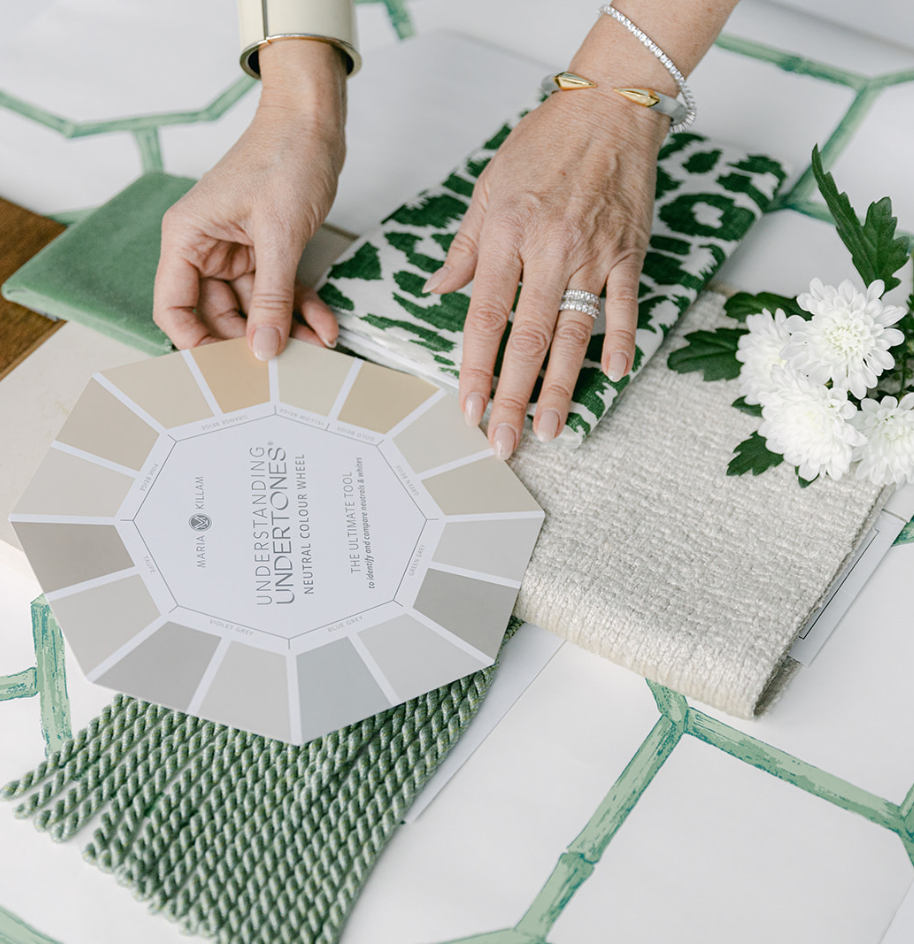
This is the difference between decorating with confidence and decorating by trial and error.

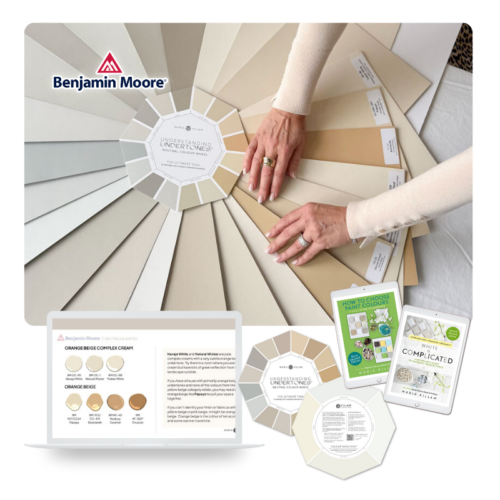
See Undertones Instantly
- Real Benjamin Moore paint chips
- All 9 neutral undertone families
- Compare directly to your fixed elements
This is exactly why my Create Your Dream Home Colour Foundations course works so well. Which we’re now offering in a paced 6 week interactive format!

At the end of Day One in a recent session, one woman said something that made me smile because it happens every single time:
“I just realized how much I didn’t know—and why nothing ever really worked.”
That realization is the turning point. Once you discover the order that everything needs to be chosen, you stop wasting money, stop second-guessing, and start making confident decisions that actually add up to a beautiful home.
So… Are You Decorating Backwards?
If you’re:
- Repainting after furniture arrives
- Hoping some magical paint colour will “save” a room
- Confused why things you chose are an unexpected colour when installed.
- Buying pieces you love individually but dislike together
The answer is probably yes.
And the good news is this: it’s completely fixable—once you understand the system and the sequence.
Decorating doesn’t have to feel like trial and error.
It only feels that way when you’re working backwards.
The new Create Your Dream Home format has you in a cohort of other homeowners, supported by my team and I, with live Q&A’s.
We can’t wait to meet you!
Maria was featured in this week’s edition of the Vancouver Sun: Design experts share how to make your home serene and comfortable. You can read the article here.
The Killam Colour System™ in Action
Stop making decisions in the wrong order and start with Maria’s proven process.
Related Posts
Trend Alert: Green is the New Black + the Most Expensive Mistake
How to Design a Home You’ll Love Forever
10 Timeless Home Finishes that are “Out”



I know you have said wood floors are like jeans. Mine are from 1947 when there was original oak flooring all over my area. I like them, and matched them in an addition in 1999 to create a seamless look in my house. Are they bossy or really like jeans when it comes to paint and widow treatments etc.? Thank you!