


I get some version of this email all the time, and it almost never comes from someone who is new to decorating.
You’ve been reading shelter magazines for years. You know what you like. You can walk into a store and spot the best thing in the room almost immediately. Your friends probably ask you to come along when they’re choosing a sofa.
And yet you can still be completely stuck regarding your own kitchen.
Sometimes it’s because you bought a house that checked all the practical boxes, but the style was never what you naturally gravitated toward in the first place. Now you’re trying to make decisions inside a house that doesn’t speak your language.

That’s when people start wondering if they’ve somehow lost their taste.
You haven’t.
The problem is that taste and design are not the same thing.
I know this because I’ve been there
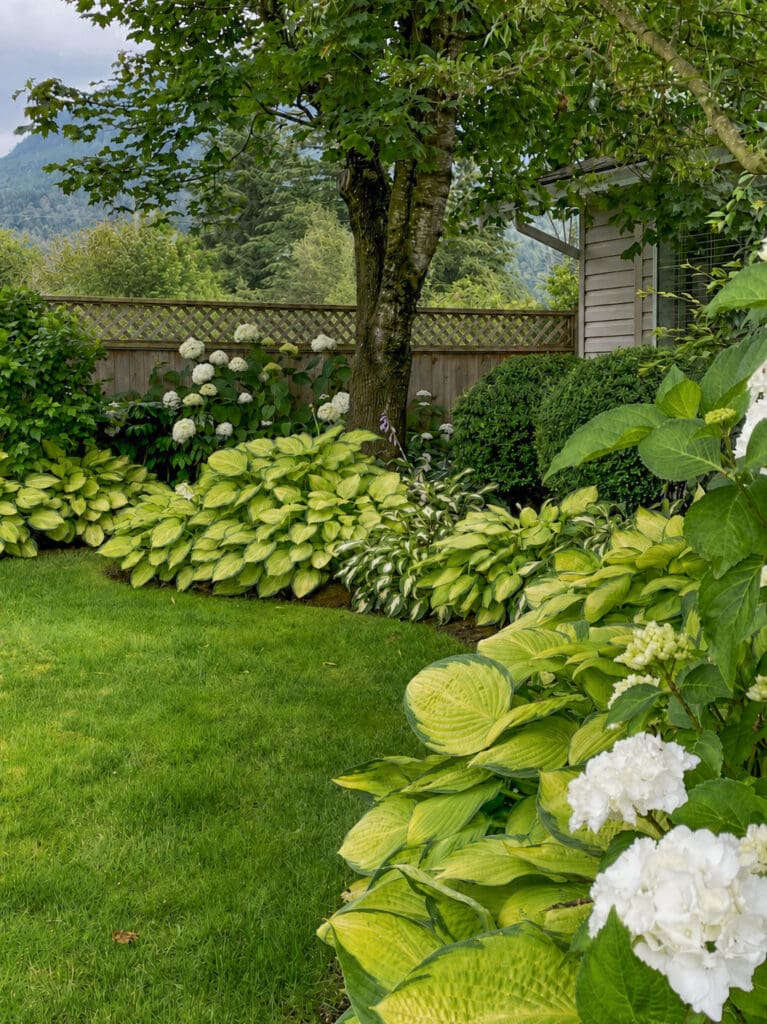
Years ago, when I was working on my last garden, I was standing in a nursery looking at hostas and called my landscape designer, MaryAnne White.
There were yellow ones, blue ones, green and white ones, green and cream ones. I liked all of them, so I thought I should get some of each.
Mary Anne said, “No. Get 12 yellow ones.”
And of course, she was right.
That conversation became one of my favourite design rules that my longtime followers often remember when they shop : boring now equals timeless later.
But there was another lesson in that story.
I have good taste. I’ve spent decades looking at colour and interiors for a living. But landscape design is not my wheelhouse, and in that moment I was doing exactly what homeowners do every day. I was choosing individual things I liked without really understanding how they would all work together once they were in place.
That is the difference between taste and design.
Taste chooses individual items. Design creates relationships.

You can stand in a showroom and love the tile, the faucet and the pendant. They can all be beautiful.
That doesn’t mean they belong together. It’s why, when I spot a random faucet or tile in a bathroom that has absolutely nothing to do with the rest of the room, the homeowner will often shrug and say, “My husband wanted to participate in the selections.”
A room works because the elements relate to each other. The countertop relates to the floor. The backsplash works with the countertop. The paint colour pulls the room together. The undertone in the new tile has to work with the stone you already own and are not replacing.
The problem is that most people are still asking, Do I like this?
That’s a perfectly reasonable question, but it is not enough. The better question is, does this belong in my house?
Good taste can actually make decorating harder

Having a good eye means you can recognize what’s beautiful. Expertise means knowing what actually belongs in the room.
A tile showroom can be full of beautiful tile and I’ll still dismiss most of it in five minutes. Because the question isn’t, “Do I like this?” It’s, “Does this belong in a timeless kitchen or bathroom?” Those are two very different questions.
That’s why “Just choose what you love and it will all come together” is such terrible advice. You can love every single choice individually and still end up with a room that feels wrong. And usually, if it feels wrong, there is a reason.
Maybe the grey you chose has a green undertone and the travertine you’re keeping is pink beige. You may not know exactly what the conflict is, but your eye can still see it.
So you repaint. You change the rug or buy different pillows. You keep trying to fix the room without fixing the actual problem. Once you understand what you’re looking at, the decision becomes much easier.
This is where your taste belongs
Taste absolutely matters. It just needs to be used in the right places.
Your fixed finishes, flooring, countertops, tile and millwork, need to work together first because they are expensive and difficult to change. This is where the timeless conversation comes in.
After that you get to have fun. Your furniture, art, textiles, lamps and colour are where your personality comes in. This is where all those things you love get to make the room feel like you.
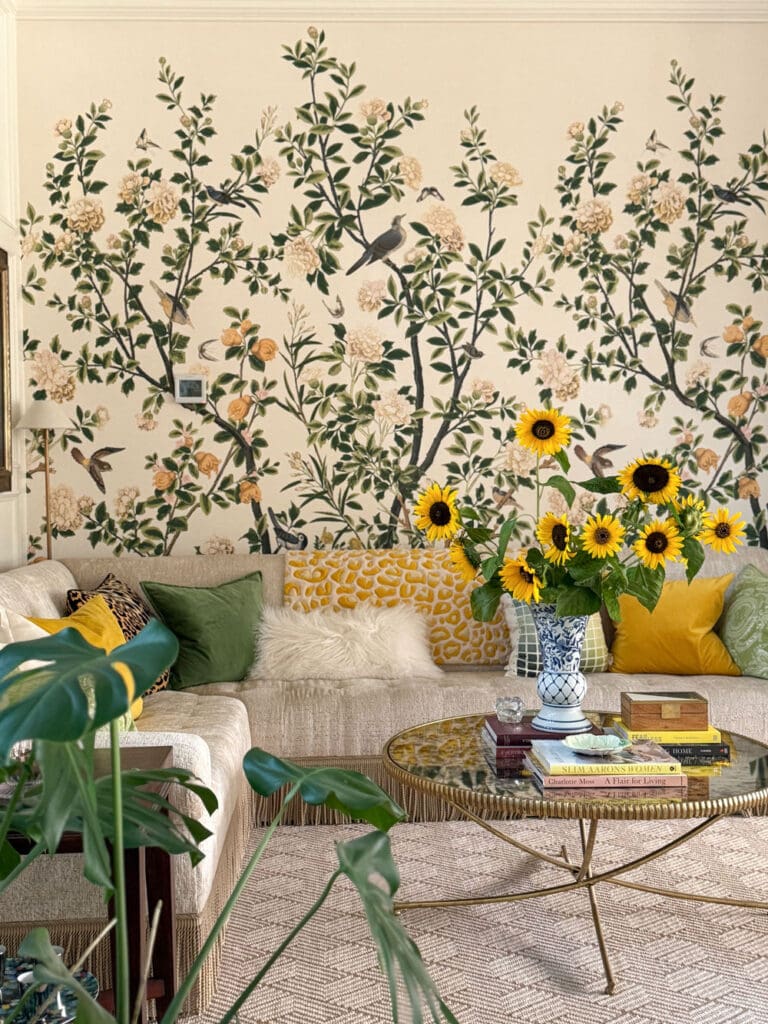
All these photos are from my current home. And yes, there are plenty of yellow hostas. Apparently I learned my lesson.
That is why good taste is not enough on its own.
You also need to know how to read the room you already have, understand what belongs with it, and make decisions in the right order.
Once you can do that, your taste becomes an asset instead of another source of confusion.
So how do you actually learn to do this?
That’s what I’m walking you through in my free live workshop, Decorate or Renovate: the magic is knowing the difference.
Your good taste needs a plan. I’ll show you how to read the room you already have, figure out what truly needs to change and what you can keep, and make your decisions in the right order, so you can finally start putting all that good taste to work.
It’s free and live on Tuesday, August 25, at 9 AM PT / 12 PM ET.
It’s live only, no replay, so come join me.
Related posts:

So relatable! Design & taste are very very different. I have always told clients, you might not always like a particular plant ( taste) but you are not meant to look at the one plant in your garden, but the overall composition of different plants, shapes, & textures.(design)
I hope you will do this workshop again. On Aug. 25th, I will be vacationing in lovely PEI, so I cannot attend.
Absolutely great article, Maria. I’ve seen this happen so often with friends/acquaintances/family who are so proud to show off the ‘new’. A piece of furniture that’s totally the wrong style or too large, new tile that was pretty in the showroom but is too bright to relate to the rest of the room or a paint colour that goes with nothing. I recommend your blog all the time. You are my best resource!